
If that’s still too challenging, adjust even more by slowing the pace or shortening the distance, and then eventually work yourself back up to the original goal. Putting on sneakers and walking down the block may not seem like much of an achievement at first, but it’s a step in the right direction. Sometimes life happens; it is completely normal to miss a day or two in any new routine. Lally says that people tend to create rigid schedules that require carrying out a desired behavior every day—even when that’s not really feasible.
Institutional Review Board Statement
Likewise, setting up your environment for automatic action is a great way to increase your likelihood of completing a certain habit. In this case, laying some hand weights around your room, changing your normal desk and chair setup to a standing/treadmill desk, or even choosing a motivational quote as your smartphone wallpaper can prompt you to exercise more. All of these changes to your environment create gentle reminders to stay active, motivating you to exercise whenever you are in this environment [9]. Lachman, of Brandeis, said that for people starting exercises routine from zero, it is also key to begin with small, manageable goals and build on them.
How Are Habits Formed 101
By giving personal value to your workouts, creating social support, and planning for obstacles, you can build a habit that becomes second nature – something that feels as natural as brushing your teeth. Missing a day or two won’t derail your progress; it’s the overall pattern of consistency that matters. With these tips, you’ll be well on your way to making exercise a lasting and rewarding part of your life.
Whether it’s a gym buddy, a group class, or an online community, being part of something larger reinforces your identity and adds positive madmuscles scam pressure to stay engaged. You feel less resistance before a workout, and scheduling exercise is more automatic. You may catch yourself saying, “I usually train on these days,” and even feel slightly off when you miss a session.
2. Study Characteristics

Following the identification of clusters, a key aspect of our analysis was assessing the impact of gym-related interventions within each cluster. We applied the DoWhy framework independently for each cluster, allowing us to evaluate the causal effects of interventions tailored to the characteristics and behaviors of each subgroup. As we mentioned previously, during this cluster-specific analysis, the cluster variable was excluded from the set of matching variables in the PSM process. This exclusion allowed us to focus on isolating the effect of the interventions within each subgroup, without introducing bias from cluster assignment.
Intervention
Once the causal assumptions were established, we applied Propensity Score Matching (PSM) to estimate the causal effects of the interventions. Finally, robustness checks were performed to validate our causal assumptions and estimates, ensuring that our findings were not artifacts of model misspecification or unobserved biases. Figures 1(c) and (d) show the cumulative distribution function for the probability of belonging to a cluster for each different cluster, signified by their unique color.
The datasets used and analyzed during the current study are available from the corresponding author on reasonable request. Moreover, we checked the reference lists of relevant reviews and papers to avoid any missing studies. If morning running is one of your goals, find out how and why to make the switch.
- Studies indicate that a flexible approach—where you look at your routine over a month rather than stressing about daily perfection—reduces the likelihood of quitting after a missed workout.
- Benefits include improved thinking or cognition for children 6 to 13 and reduced short-term feelings of anxiety for adults.
- Pearson’s Chi-square test was applied to see the associations of physical activity levels with participants’ characteristics.
- When helping a patient plan how to fit health recommendations into their day, it is important for health care providers and patients to be realistic.
- This formula includes key performance ingredients like citrulline to support blood flow and muscle pumps, along with beta-alanine to help delay fatigue during intense training.
- Most of us have heard the statement that it takes 21 days to form a new habit.
How Member States can increase levels of physical activity
Additionally, Kilb et al. and Lally et al. [5,36] emphasised the role of repetition as a critical determinant in habit formation, as outlined in our table. Repetition not only reinforces the behaviour but also helps to make it more automatic and deeply ingrained over time, further solidifying the habit. Firstly, this research aligns with several United Nations Sustainable Development Goals (SDGs) (Nations, 2015), particularly SDG 3 (Good Health and Well-being) and SDG 11 (Sustainable Cities and Communities).
When we extended our analysis to users who survived even longer, we observed a steady decline in the number of members maintaining their attendance streak. Unlike laboratory habit studies that track reaction times or self‐report automaticity scales (Gardner et al., 2022, 2012), our large‐scale gym data lack those direct habit measures, so we use a survival‐based proxy for persistence instead. To our knowledge, no real‐world study to date has (a) segmented exercisers by temporal habit patterns, (b) mapped comprehensive, multi-level interventions onto those patterns, and (c) used time‐to‐habit survival models to quantify persistence. Survival analysis models this directly by linking dropout risk to early cue–behavior repetition, turning habit formation into a time-to-event problem. Recent meta-analyses used the SRHI and SRBAI scales to examine the correlation between habit strength and health behaviors, highlighting the significant impact of habit on health behavior [4, 15]. Previous literature reviews have described habit formation interventions for promoting health behavior, including targeted behaviors and behavior change techniques (BCTs) [16, 17].
The analysis shows that older members tend to maintain their gym habits longer than younger ones. This comparison across different groups suggests that when people exercise during the day, it has less effect on habit formation than their demographics. In addition to the meta-analysis, we also conducted a narrative synthesis of the time taken to reach habit automaticity thresholds and the plateauing of automaticity scores over time. Finally, using the four-stage framework for habit formation proposed by Lally and Gardner [7], we synthesised the factors influencing the development of automaticity.
3 Cluster-level Deviations for Demographic Groups
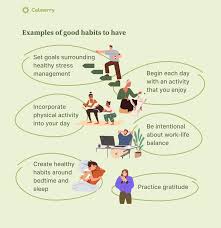
The standardized effect sizes were then combined to obtain the mean and confidence interval, allowing us to assess the collective impact of multiple studies [25]. One of the most effective ways to speed up habit formation is to anchor your routine to a consistent context. Research shows that when a behavior happens in the same environment—same time, same place—it requires less cognitive effort over time. That predictability acts as a strong cue, triggering your habit loop more reliably. Implementing effective policies to increase levels of physical activity requires a collective effort, coordinated across multiple government departments at all levels, including health, transport, education, employment, sport and recreation, and urban planning.
Make It Easier to Show Up: Context, Cues & Enjoyment
As shown in Figure 3(a), the cumulative distribution of members’ survival series shows a rapid increase in gym attendance in the first weeks. To structure our interpretation, we aimed to define key milestones in this decline. Specifically, we identified the weeks at which 50% and 80% of users had ceased to maintain their attendance streaks. These thresholds were not selected based on any external theoretical rationale but served as pragmatic markers to summarize habit formation and dropout trends. Using this approach, we observed that approximately 50% of members did not maintain their attendance streak at the 6-week point. This 6-week milestone emerged as a critical point in the habit formation process where members either solidify or begin to abandon their gym habit.
Forming a Routine
In the study discussed above, consistent performance of the behaviors varied by behavior type. This indicates that turning adherence into routine is likely not a dichotomous process. Occasional nonadherence to a behavior will not derail progress made to creating the routine, and perfect adherence does not need to be a goal or expectation for a patient.
Stack habits
A few months ago, I wanted to begin increasing my strength and build muscle to reach goals I set for myself. I used a few other workout apps but this is the only one I’ve enjoyed and seen good results with it. I’d recommend if you’re new to weight lifting or took a long break from it, try out one of the beginner 12 week programs.